Cagrilintide – Next-Generation Amylin Analogue for Synergistic Weight Management
Cagrilintide is a long-acting, dual amylin and calcitonin receptor agonist (DACRA) representing a major breakthrough in metabolic research. While popular weight management therapies rely heavily on the GLP-1 pathway, Cagrilintide operates via a completely distinct mechanism by mimicking the pancreatic hormone amylin. In clinical and laboratory models, it is heavily studied for its profound, independent impact on satiety and its ability to act synergistically when paired with GLP-1 or GIP receptor agonists to accelerate fat loss.
Thank you for reading this post, don't forget to subscribe!How It Works
Cagrilintide targets appetite and weight regulation through an alternative neurochemical pathway:
-
Amylin Receptor Agonism: Amylin is naturally co-secreted with insulin to signal fullness. Cagrilintide binds to these receptors in the brain to trigger high-level satiety signals.
-
Delayed Gastric Emptying: It slows down the rate at which food leaves the stomach, prolonging physical fullness after eating and flattening post-meal blood sugar spikes.
-
Glucagon Suppression: It inhibits the inappropriate secretion of glucagon, helping to regulate glucose homeostasis and preventing the body from releasing excess stored sugars into the bloodstream.
What to Expect
In research models, Cagrilintide is noted for delivering robust metabolic modifications:
-
Profound Reduction in “Food Noise”: Exceptional control over appetite signaling and specific cravings.
-
Synergistic Fat Loss: When paired with a GLP-1 agonist (such as Tirzepatide or Retatrutide), it provides a multi-pathway attack on body fat, often breaking through stubborn weight plateaus.
-
Preservation of Metabolic Efficiency: Supports metabolic health without relying entirely on insulin-stimulating pathways.
Side Effects & Management
Because Cagrilintide slows digestion and alters satiety signaling, gastrointestinal adaptations are the most frequent baseline reactions:
-
Nausea and Gastrointestinal Discomfort: Most common during the initial weeks of a protocol or immediately following a dose escalation. Management: Keep meal portions small, prioritize easily digestible proteins, and avoid high-fat foods.
-
Constipation or Diarrhea: Driven by changes in gastric motility. Management: Prioritize high fluid intake and monitor daily dietary fiber intake.
-
Injection Site Reactions: Minor localized redness, itching, or swelling. Management: Ensure proper sterile injection technique and rotate subcutaneous sites weekly.
Dosage & Protocol (For Research Purposes)
Cagrilintide protocols heavily emphasize a conservative titration schedule to ensure gastrointestinal tolerance.
-
Administration: Once-weekly subcutaneous injection.
-
Standard Dosing Models: Research frequently initiates at a micro-dose baseline (e.g., 0.25mg to 0.5mg weekly) and scales up gradually every 4 weeks depending on the specific protocol goals.
-
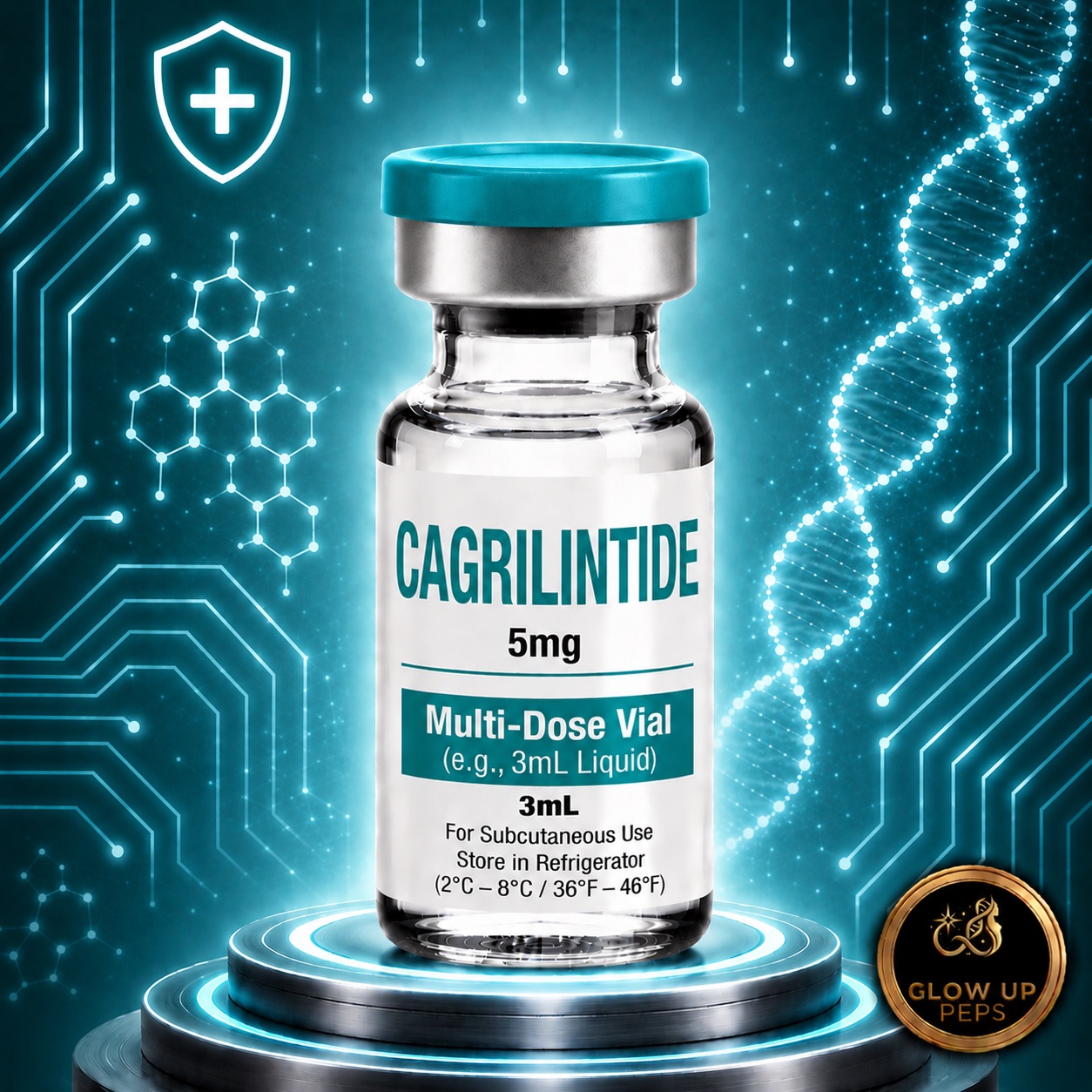
Reconstitution: Reconstitute the 5mg lyophilized powder carefully using bacteriostatic water and precise sterile procedures.
-
Storage: Store un-reconstituted vials in a cool, dark place. Once reconstituted, the vial must be refrigerated immediately and protected from light to maintain peptide stability.
Formulation Breakdown
-
Total Content: 5mg per vial.
-
Form: Lyophilized sterile powder for accurate research compounding.
-
Purity: Laboratory-grade purity verified for precise metabolic tracking.
Disclaimer
For research purposes only. This product is not intended to diagnose, treat, cure, or prevent any disease. Always consult with a qualified healthcare professional before beginning any peptide protocol. Not for human consumption.