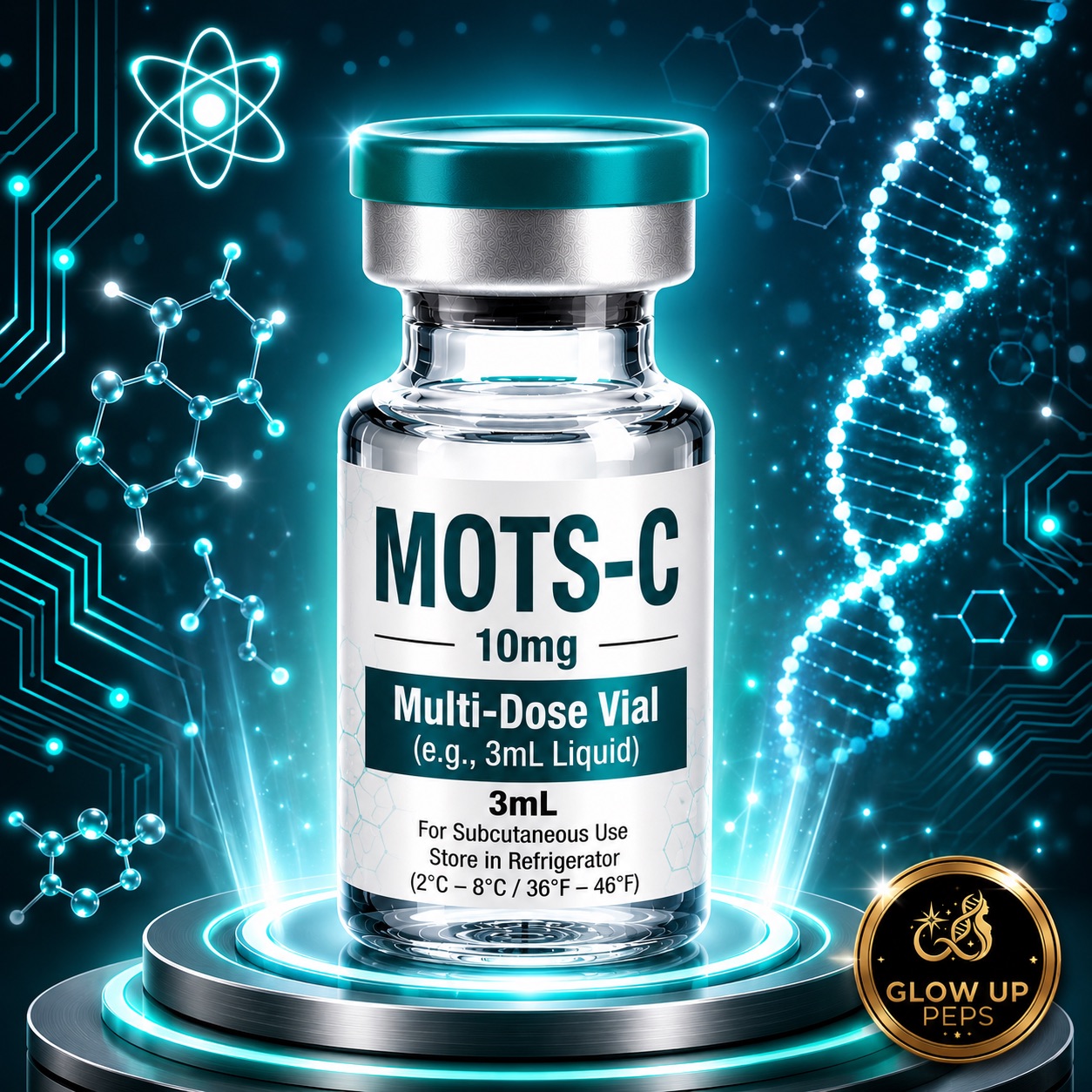
MOTS-c – The Mitochondrial-Derived Exercise Mimetic
MOTS-c (Mitochondrial Open Reading Frame of the 12S rRNA-c) is a groundbreaking, naturally occurring peptide encoded directly within the DNA of cellular mitochondria rather than the cell nucleus. Known in the research community as an “exercise mimetic,” MOTS-c signals the body to replicate many of the systemic metabolic and protective benefits of high-intensity physical exertion. It is a premier focus in advanced studies exploring metabolic flexibility, insulin sensitivity, cellular longevity, and physical endurance.
Thank you for reading this post, don't forget to subscribe!How It Works
MOTS-c acts as a major cellular signaling molecule that primarily targets skeletal muscle and systemic metabolic pathways:
-
AMPK Activation: MOTS-c directly activates AMP-activated protein kinase (AMPK), the body’s master regulator of energy. This pathway mimics the cellular environment of exercise, turning on energy-burning processes.
-
Glucose Uptake Modulation: It significantly increases glucose clearance and uptake into skeletal muscle cells, helping to manage healthy blood sugar homeostasis independent of traditional insulin signaling channels.
-
Fatty Acid Oxidation: It turns on the cellular mechanics required to break down fatty acids for fuel, preventing lipid accumulation and supporting metabolic adaptation.
What to Expect
In laboratory and research settings focused on physical output and metabolic health, MOTS-c typically exhibits robust outcomes:
-
Enhanced Physical Performance: Marked improvements in running capacity, physical stamina, and muscle workload capacity.
-
Metabolic Resilience: Support for burning stored fat and a reduction in the accumulation of white adipose tissue, even under challenging dietary conditions.
-
Insulin Sensitivity Optimization: Enhanced cellular responsiveness to glucose, providing an excellent mechanism for metabolic health research.
-
Cellular Anti-Aging: Protection against age-related metabolic decline by revitalizing mitochondrial function across systemic tissues.
Side Effects & Management
MOTS-c is a native mitochondrial peptide and is generally well-tolerated, though its profound effect on cellular energy can cause minor, temporary adjustments:
-
Injection Site Flushing or Redness: Localized skin warmth or a brief red mark may appear immediately following subcutaneous administration. Management: Ensure pristine sterile technique and rotate injection sites across the abdominal fat layer.
-
Mild Transient Fatigue: As cellular pathways acclimate to accelerated ATP production and metabolic shifting, a brief wave of tiredness can occur. Management: Maintain standard hydration and consider scheduling research windows around rest periods.
-
Lactic Acid Sensation: Some protocols note a temporary sensation akin to mild muscle soreness, similar to post-workout recovery. Management: Ensure adequate baseline electrolyte levels.
Dosage & Protocol (For Research Purposes)
MOTS-c protocols are typically run in structured cycles rather than indefinite continuous use.
-
Administration: Subcutaneous injection.
-
Standard Research Dosing: Clinical models frequently study dosages ranging from 5mg to 10mg per week, often divided into 2 or 3 separate injections (e.g., 5mg administered twice a week) over a 4 to 6-week research cycle.
-
Reconstitution: Carefully reconstitute the 10mg lyophilized powder using bacteriostatic water, ensuring a slow trickle down the side of the glass to protect the peptide chain.
-
Storage: Un-reconstituted vials must be kept away from heat and light. MOTS-c is highly sensitive to temperature; once reconstituted, it must be refrigerated immediately to prevent rapid degradation.
Formulation Breakdown
-
Total Content: 10mg per vial.
-
Form: Lyophilized sterile powder requiring precise fluid reconstitution.
-
Purity: Laboratory-grade purity verified for accurate metabolic tracking.
Disclaimer
For research purposes only. This product is not intended to diagnose, treat, cure, or prevent any disease. Always consult with a qualified healthcare professional before beginning any peptide protocol. Not for human consumption.